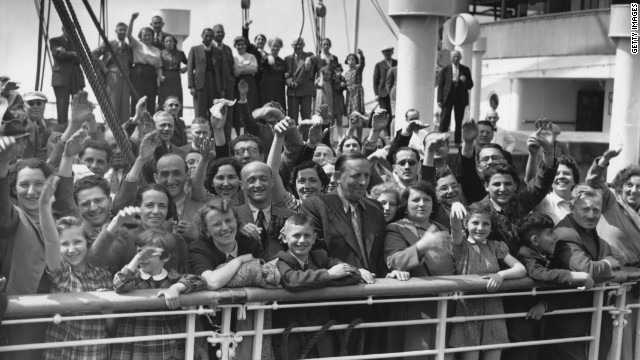
Why can’t today’s refugees enter by ship like they did 140 years ago?
The Present
The border crisis along the Rio Grande is a definite problem for the United States. I give credit to Donald Trump for bringing the issue to the forefront at a time when no one else did. However, Mr. Trump’s main focus/concern is squarely on the quality of the people coming in. He considers them criminals and has publicly said so. Some may be, but the majority are simply seeking a better life for themselves and their children. IMO, if there are murderers and thugs slipping through it is due both to the large number of people crossing and the process involved.
The search for a better process in the future has me searching 140 years ago in our nation’s past.
The Past
In the 1880s we also had refugees pouring into our country. Like the people at the border today, these were people not necessarily wanting to become Americans but were people looking to mostly escape—poverty, oppression, crime—and saw America as the best place to go.
Unlike the refugees of today, these people came from Western and Eastern Europe and by ship. Early on many arrived at Castle Garden, formerly known as Castle Clinton, at the southern tip of Manhattan. The number of people coming in overwhelmed this location, so land was acquired nearby at a former munitions site called Ellis Island.

According to the History Channel website, from 1900 to 1914—the peak years of Ellis Island’s operation—an average of 1,900 people passed through the immigration station every day. Most successfully passed through in a matter of hours, but others could be detained for days. On April 17, 1907, an all-time daily high of 11,747 immigrants received was reached; that year, Ellis Island experiences its highest number of immigrants received in a single year, with 1,004,756 arrivals.
Learning from experience, the Immigration department later began to prep refugees at the point of departure rather than at the point of entry. This both sped up the process at Ellis Island and for those who were rejected, they did not have to be shipped back.
Solution

Why can’t today’s refugees enter by ship in the Gulf of Mexico? They have been coming through the southern borders for decades. Their numbers do not appear to substantially be dropping anytime soon. An arrangement could be made with Mexico to allow processing and ships to depart. There are deep water ports in Houston, New Orleans, Mobile, Miami to provide entry. In fact, New Orleans was also used as a destination port in the late 1800s. The U.S. could set up several processing stations so no one city receives them all. This would allow the United States to take control of the process instead of refugees dictating to us how they enter.

If an orderly process was set up, we could go ahead and seal the southern border. Anyone then crossing the Rio Grande and slipping through would then be immediately subject to arrest and deportation, regardless of the reason for coming. Why hasn’t anyone at least looked into the feasibility of this idea? As of today, no one has come up with any other, have they? If rerouting their destination is a major inconvenience for the refugees, then so be it. Those illegals already here could go through, but would have to find a way to get to the processing station.
Having refugees arrive by ship isn’t some made-up scheme; it was actually done a century ago—and it worked. I don’t see any reason why it should not at least be seriously explored, if not implemented.
This isn’t a rant, but a look at a possible solution without demeaning anyone. If you have taken the time to read this and think it is worth exploring, share it with others.